
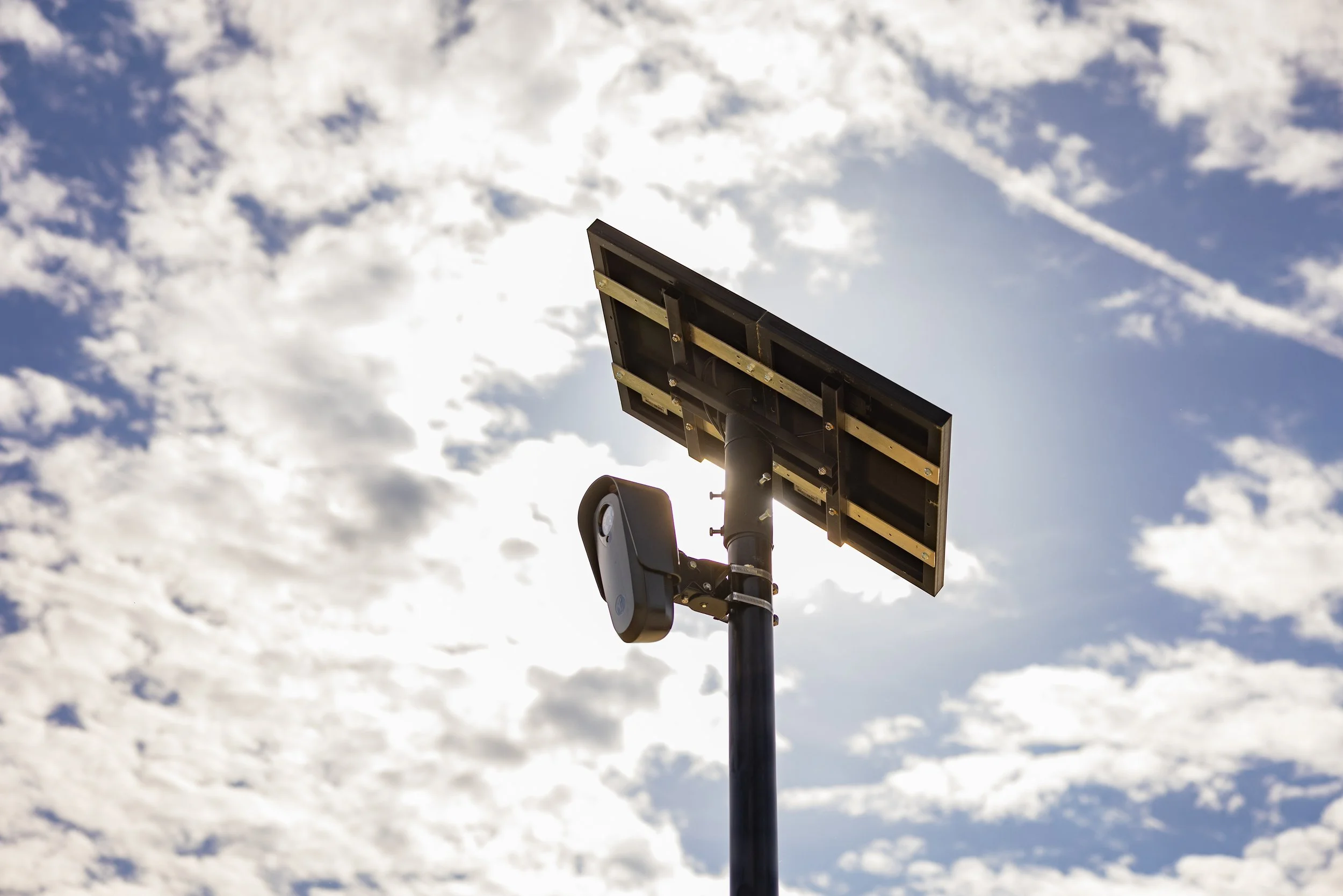
Flock Safety Cameras
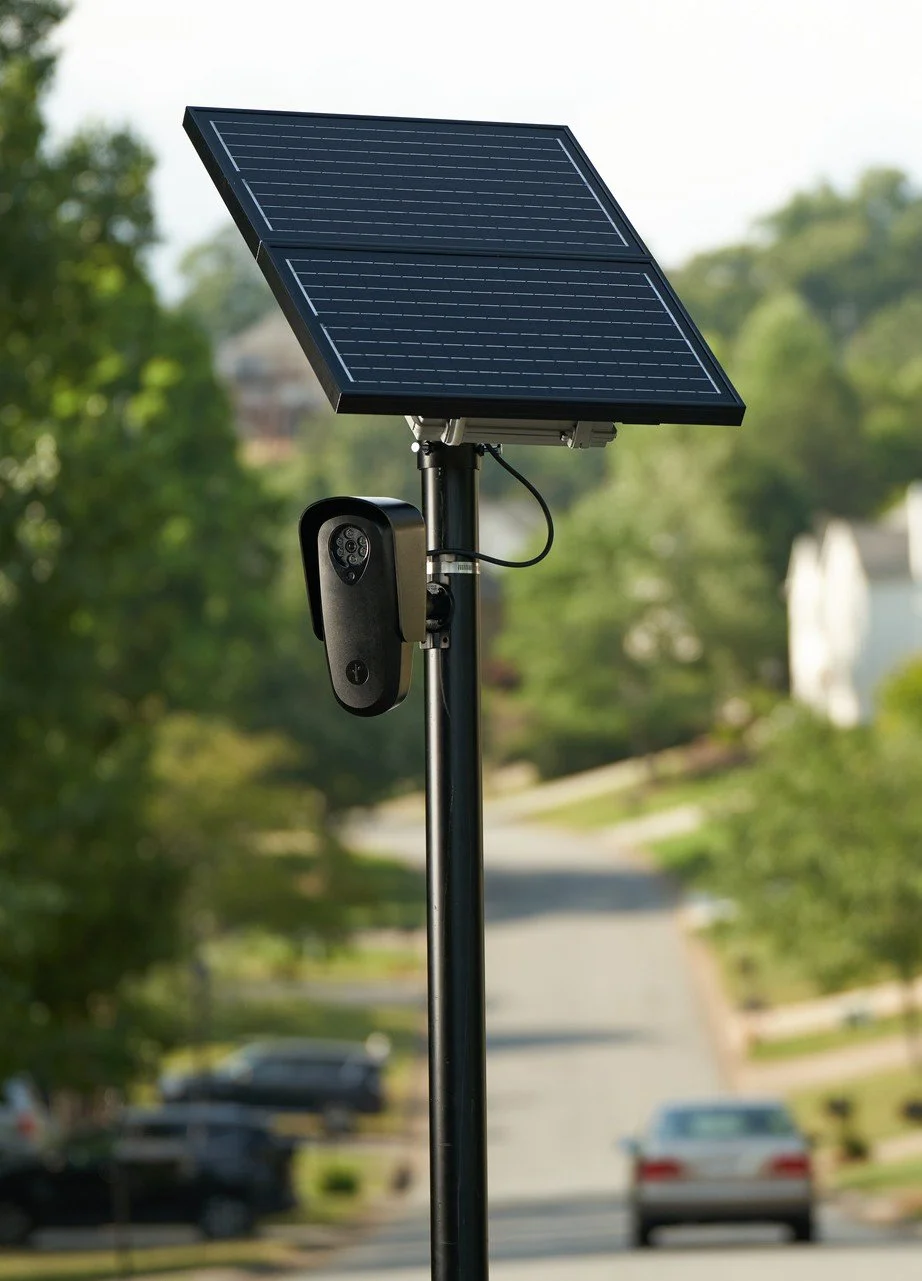
The Thornton Police Department uses Flock Safety cameras as an investigative tool to help solve crimes and improve community safety. These stationary cameras capture images of license plates and limited vehicle characteristics—such as make, color, and visible features—to assist investigators in identifying vehicles connected to criminal activity.
Why we use Automated License Plate Reader (ALPR) cameras:
ALPR cameras capture images of license plates along with basic vehicle characteristics, including color, make, and visible identifying features such as stickers, racks, or toolboxes, to assist with criminal investigations.
To capture license plates and key vehicle characteristics that support investigations.
Vehicle characteristics can remain useful even when license plates are removed, changed, or obscured, allowing investigators to continue identifying vehicles connected to criminal activity.
Because suspects may remove or alter license plates.
ALPR technology allows investigators to search for vehicles based on available information, which can help solve crimes and recover stolen vehicles.
To help solve crimes and recover stolen vehicles without increasing risk.
To receive real-time alerts tied to serious investigations.
The system can provide real-time alerts when vehicles associated with stolen property, active warrants, or missing persons cases (such as Amber Alerts) enter the city, supporting timely law enforcement response.
Flock cameras are placed in fixed locations throughout the city. They capture still images of passing vehicles, including:
License plate number
Vehicle make and color
Distinguishing details (e.g., bumper stickers, roof racks, damage, unique modifications)
Images are transmitted securely via encrypted cellular connection and stored in a secure Flock Safety cloud environment. The cameras do not capture:
People/faces
Gender
Race/ethnicity
Additionally, officers cannot search Flock data for the above criteria that the cameras do not capture.
How ALPR cameras work:
To maintain trust and provide visibility into how ALPR technology is used in Thornton, the department has a public Flock Transparency Portal. The portal includes:
The number of cameras in use
Organizations that can access Thornton Flock data
Data on system searches
Statistics on the volume of vehicles photographed
Policy information
The Flock Transparency Portal will be automatically updated on a daily basis.
The Thornton Police Department is committed to protecting individual privacy and ensuring all technology is used lawfully and responsibly.
Transparency and Accountability:
Thornton Police Department staff recently presented information to City Council regarding our use of LPRs during two separate meetings:
February 3, 2026
April 7, 2026
April 28, 2026 (Follow-up)
The weekly audits discussed at the April 7 planning session are underway. The TPD Technical Services Unit of four staff took over the primary audit role in mid-April. Going forward, members of command staff will assist if needed and will follow up on any issues identified.
The Technical Services Unit staff have received training on the use of the Flock Audit Assistant, which flags activity searches that fall into the below categories.
Searches for the same plate beyond a 30-day timeframe
Multiple case numbers used for the same license plate
License plates that are only searched by a single user
Searches that only look at data from non TPD cameras
Repeated searches for the same plate during a narrow window of time
As such circumstances are identified in the system, they go into a queue to be evaluated further by an administrator. When the audit team goes into the Organization Audit section in shows them how many are pending review. The auditor (live person) has to research and state whether the search is 'Expected User Behavior' or not. The Audit Assistant tool will only evaluate TPD searches. It does not flag the searches non TPD users conduct that touch our data. Other than, of course, if the users home agency is using the tool. In that case the flagged search would go into that user's agency queue.

Thornton Police Chief Jim Baird speaks to City Council about ALPR systems:
“As communities across Colorado continue to balance public safety, transparency, and individual rights, technology will inevitably be a part of that conversation. Automated License Plate Reader (ALPR) systems—such as the Flock Safety camera network currently in use by the Thornton Police Department—have proven to be an incredibly valuable tool to maximize public safety. This technology has helped us to develop leads and ultimately solve crimes that would have otherwise remained unsolved or even just taken longer to solve, thereby leaving offenders out on the street longer to continue to victimize our community. In addition, it has assisted the TPD in locating missing/endangered people such as elderly members of our community suffering from dementia related conditions as well as at-risk youth. Another compelling public safety benefit of this technology (for one of the two systems we currently use anyway) is that it proactively alerts us to the presence of vehicles entering our community that are being sought in connection with a crime either here or elsewhere.
At the same time, I do understand that the growth of these technologies has raised important questions about privacy, data security, and public trust. Our agency adopted the Flock system with clear, limited objectives: to enhance situational awareness, assist in the investigation of serious crimes, and to provide timely information that helps protect our residents, businesses, visitors, and critical infrastructure. In practice, the system has delivered significant benefit. It has supported investigations involving stolen vehicles, missing persons, violent crime, property crime and other high-priority incidents, often reducing the time and resources required to resolve them. From a public safety standpoint, this is one of the greatest tools I’ve seen in my 33 years in this profession.
However, effectiveness alone is not good enough. As the system has expanded and as public awareness of surveillance technologies has grown, so too has concern about how data is collected, stored, accessed, shared and protected. These concerns are valid. Coloradans place a high value on privacy and state law reflects a strong commitment to protecting personal information and ensuring accountability in the use of our data-driven tools. Any technology deployed in the public sphere must align with operational needs, consistent with community values and within the guardrails provided by legal standards.
This presentation is not about whether safety and privacy are competing goals; rather, it is about how they can and, in fact, must coexist. Transparency around how the system is used, clear limitations on its purpose, regular policy review, and meaningful oversight are essential to maintaining the public trust we enjoy here in Thornton. I am committed to maintaining our focus on public safety while ensuring we do everything we can to protect the privacy of our community.”
Frequently Asked Questions
-
Flock ALPRs capture still images of passing vehicles including:
License plate number
Vehicle make, body style, and color
Unique features (stickers, tool boxes, cargo racks, etc.)
The date, time, and location of the image
They do not capture the identity of occupants.
-
ALPR data supports:
Criminal investigations
Locating missing or endangered persons
Real-time alerts for vehicles involved in crime (e.g. National Crime Information Center, Colorado Crime Information Center, Colorado Bureau of Investigation alerts, etc.)
Locating stolen vehicles (stolen vehicles are frequently used to commit other crimes)
Safety and crime-prevention efforts
Data cannot be used for the following purposes:
Federal immigration enforcement
Enforcement of abortion laws in another state
Any other non-law enforcement purpose
-
All data is automatically deleted after 30 days, unless it is specifically retained as evidence in an ongoing criminal investigation. This short retention period balances public safety needs with necessary privacy protections.
-
All ALPR data is owned by the Thornton Police Department. Flock Safety stores the data securely on behalf of the department, but never sells or shares data with third parties.
-
Access is strictly limited to authorized Thornton Police Department personnel who have completed required training. All searches are logged and subject to supervisory review.
The Thornton Police Department allows access to other state and local law enforcement connected to the Flock network. In return, the Thornton Police Department has reciprocal access to outside agency data. Outside agency use is monitored by Thornton Police Department staff to ensure compliance with Colorado law, and verify use is for law enforcement purposes.
Thornton Police Department does not provide access to any federal law enforcement agencies.
-
The Thornton Police Department has multiple layers of oversight:
Mandatory training for all users
Routine audits of system access and searches
Automatic data deletion after 30 days, if not germane to an investigation
Strict policy compliance required for all personnel
Any allegation of misuse of Thornton Police Department data, including Flock data, is subject to investigation and discipline if sustained.
-
The Thornton Police Department implemented Flock Safety cameras in 2022 as part of its existing use of Automated License Plate Reader (ALPR) technology. At the time of deployment, the department was using another ALPR vendor. The Flock system was added to expand coverage at additional entry points into the city.
Because the cameras were implemented as an extension of an existing investigative tool and approved through normal city budget and policy processes, a separate public outreach or consultation process was not conducted prior to deployment.
We recognize the importance of transparency and community involvement, especially when new technologies are introduced. We are committed to ongoing dialogue with residents and welcome feedback on how we can continue to balance public safety with privacy expectations.
-
No. However, the Thornton Police Department policy does require officers to have a legitimate law enforcement reason when conducting an ALPR search. This may include entering a case report number, call for service number, or documenting another investigative reason within the system.
Officers frequently review vehicles that trigger real-time alerts to determine whether the vehicle has appeared elsewhere in Thornton and whether that information could help locate a stolen vehicle or a vehicle connected to a crime.
Because of these real-time investigative uses, requiring a case number or call for service number to be entered for every search would not always be practical. Doing so would create a delay in the investigation and unnecessary administrative steps, such as generating a call for service solely to document the search. Even so, all searches are required by policy to be associated with an active law enforcement investigation or for training purposes.
Department policy will continue to be reviewed and updated as technology and system features evolve.
-
Yes. The Thornton Police Department audits searches of its ALPR data regularly to ensure they comply with state law and department policy. If a search is conducted for a reason that is not consistent with those requirements, the agency’s access to Thornton’s data may be revoked. As of February 2026, the Thornton Police Department has revoked access to over 2,100 outside agencies.
Access is most often revoked when a search does not include a clear or appropriate investigative reason. Since Flock updated its system to require users to select a reason from a drop-down menu, some revocations have occurred when agencies selected “Other” but did not provide a clear explanation for the search.
These audits help ensure the system is used only for legitimate law enforcement purposes and in accordance with applicable laws and policies.
-
The Thornton Police Department uses ALPR for two purposes, real-time proactive alerts and investigative searches.
Real-Time Proactive Alerts - The ALPR system provides instantaneous notifications to officers when a "vehicle of interest" passes a camera location. These alerts are triggered by license plates documented in the following databases:
National & State Databases: NCIC (National Crime Information Center) and CCIC (Colorado Crime Information Center).
CBI Active Alerts: Active Amber Alerts, Missing Senior Alerts, Medina Alerts, Endangered Missing Alerts, etc.
Custom Investigations: Specific plates manually entered by officers related to ongoing criminal investigations.
These alerts provide officers with immediate opportunities to recover stolen property, locate missing people, and apprehend wanted individuals. By identifying vehicles in real time, the department can intervene quickly to prevent further crime, protect the community, and reunite missing people with their loved ones.
Investigative Searches – Used as a tool to solve crime after they have occurred or locate a vehicle associated with a missing person. This functionality is particularly vital when a full license plate number is unavailable by providing the following search options:
Advanced Filtering: Officers can search by vehicle descriptors such as make, type, and color.
Unique Identifiers: The system allows for searches based on specific features like roof racks, bumper stickers, window decals, or toolboxes—details that victims in crisis are more likely to remember than a license plate.
Strategic Lead Generation: While the system does not track vehicles in real-time across the city, it can establish patterns. If a vehicle of interest has passed the same camera multiple times over the previous 30 days, it provides investigators with a high-probability "starting point" for their search.
-
Officers cannot search for specific words, decals, or the content of bumper stickers. ALPR technology captures license plates and basic vehicle characteristics, such as make, model, color, roof racks, or whether a vehicle has a bumper sticker. This allows officers to include general features in a search, but the system cannot identify or search for the text on the sticker.
ALPR is used solely to help locate vehicles connected to investigations or alerts, not to track or profile individuals.
-
Traditional law enforcement databases, such as CCIC and NCIC, allow officers to determine if a vehicle is stolen or linked to a wanted person and provide details like make, model, and VIN (Vehicle Identification Number). Officers can access these databases during investigations or traffic stops. However, these systems do not provide the location of a stolen vehicle or specific time it was at a location.
ALPRs are the only tool that captures this real-time information, taking a photo of a vehicle’s license plate along with the date, time, and location. This gives officers actionable intelligence immediately.
For example, in a recent tragic incident involving a 14-year-old killed in a hit-and-run, ALPRs allowed officers to quickly identify the suspect vehicle, issue a Medina Alert, and apprehend both the vehicle and the driver within two hours. This rapid response wouldn’t have been possible using traditional databases alone, highlighting the unique and critical role ALPRs play in real-world investigations.
-
Some private businesses in Thornton, such as Home Depot, use ALPR systems on their own property. Access to that data is controlled by the business, and can only be shared with individual law enforcement agencies at their discretion. Other agencies cannot access this ALPR data from TPD.
-
The initial purchase and installation of Flock Safety cameras totaled $50,750, funded by the Federal JAG Grant. The system is renewed annually, with costs included in the Police Department’s operational budget.
In 2025, the renewal cost was $48,139.48, and the 2026 budget request is $51,000 to account for potential cost increases. Funding for the system did not require reducing or eliminating any other services, and the renewal was added as a new budget item.
Don’t see the answer to your question?
We know people have questions and concerns about the use of license plate reader (LPR) technology and Flock Safety, and we take those questions seriously. If you don’t see your question addressed in the FAQ or materials on this page, you can submit it directly to Police Department staff using the form below.
This approach allows us to review questions carefully, provide accurate responses, and share answers publicly when it’s helpful for the broader community. If your question isn’t already covered, we may add it to the FAQ after responding to you so others can benefit from the information as well.
Recent Thornton Success Stories
Flock ALPR cameras have helped Thornton Police Department investigators quickly identify vehicles involved in criminal activity, recover stolen vehicles, and locate missing persons.
Missing Endangered Adult Safely Located Using ALPRs (February 2026)
Officers were dispatched to a report of a missing and endangered female who had left her residence alone. The individual suffers from Alzheimer’s and dementia and requires medication. Patrol officers immediately began canvassing the area while simultaneously utilizing ALPR technology to determine whether her vehicle had left the city.
Using ALPR, officers were able to see that the vehicle had traveled through several neighboring jurisdictions. This allowed officers to coordinate quickly with surrounding agencies. The female was contacted and returned home safely in under two hours. Without ALPR technology, coordinating across multiple jurisdictions and locating her so quickly would not have been possible.
Armed Robbery and Sexual Assault Investigation Supported by ALPR (April 2024)
Officers investigated a robbery in which a suspect threatened employees with a knife. During the incident, the suspect also committed a sexual assault before fleeing the area and later robbing another business. Surveillance video showed the suspect’s vehicle with distinctive paint damage but no visible license plate. Using ALPR technology, detectives identified a vehicle with matching characteristics, leading to the identification and arrest of the suspect.
Hit-and-Run Homicide Supported by ALPR (July 2024)
Officers investigated a hit-and-run homicide and had only a basic description of the suspect’s vehicle. Detectives used a Flock ALPR camera to locate the vehicle and determine the associated license plate. Although the plate was registered to another vehicle, investigators were able to trace it to the correct residence. This crucial information led to the suspect being taken into custody approximately eight hours after the incident.
Fleeing Suspect Apprehended with ALPR (September 2025)
A suspect awaiting trial on charges of kidnapping and sexual assault of a child removed his ankle monitor and attempted to flee the metro area. Detectives identified the vehicle and entered the license plate into a Flock custom hot list. The vehicle triggered a Flock camera alert in southern Colorado, allowing law enforcement in that area to locate it within hours. These efforts led to the suspect’s apprehension and prevented him from evading trial.
Burglary Suspect Apprehended with ALPR (August 2025)
Following an attempted burglary at a local dispensary, Thornton investigators learned that there had been several similar burglaries at dispensaries throughout the metro area. The business had video that captured a suspect vehicle and its plate number. The vehicle had been stolen and its location was unknown. A search through Flock indicated the vehicle had passed a Thornton camera giving investigators a general area to start looking. Investigators were able to locate the vehicle which led to the identification of a residence where one suspect was living. A search warrant was obtained on the residence and evidence from the burglaries was located. Several suspects were identified and arrested.
Prolific Theft Suspect Apprehended with ALPR (October 2024)
A suspect had stolen tens of thousands of dollars’ worth of merchandise from stores in the Denver area, including the Denver Premium Outlets. Because the outlets are near the highway, the suspect often fled before officers could arrive. Detectives identified the suspect’s current vehicle and added the license plate to a Flock custom hot list. Several days later, the vehicle triggered a Flock camera alert in Thornton, allowing officers to locate the vehicle and take the suspect into custody.
Missing Person Located with ALPR (October 2024)
An elderly male with dementia went missing from his Thornton residence and drove the family vehicle, which he was not supposed to be operating. Family members had little idea of his whereabouts, and officers were initially unable to locate the vehicle. The vehicle’s license plate was entered into a Flock custom hot list. Within two hours, Flock camera alerts allowed officers to locate the vehicle and ensure the individual’s safety.
Child Exploitation Suspect Apprehended with ALPR (November 2025)
A known suspect wanted on charges of child exploitation had their vehicle identified and the license plate entered into a Flock custom hot list. One day, the vehicle triggered a Flock camera alert in Thornton. Officers responded and located the vehicle in a nearby parking lot. The suspect was contacted and taken into custody.
Grocery Store Robbery Supported by ALPR (April 2024)
A suspect robbed victims of their groceries at knifepoint in a parking lot. While no license plate was visible, the victims were able to provide a description of the suspect’s vehicle. The vehicle later passed a Flock ALPR camera, allowing detectives to identify it. This ultimately led to the suspect’s arrest.
Theft Suspect Apprehended with ALPR (December 2024)
Officers responded to a theft at a local jewelry store where a suspect had taken a valuable chain. They reviewed store surveillance footage and followed up with neighboring businesses to gather additional information. Using ALPR technology, detectives were able to identify the suspect’s vehicle and locate the individual. The suspect was arrested, and the case ultimately resulted in a conviction and restitution.
Felony Menacing Suspect Apprehended with ALPR (March 2025)
Officers investigated a felony menacing incident involving a handgun, and the victim provided a vehicle description and partial license plate. The license plate provided was incorrect, but ALPR technology identified a matching vehicle with a similar plate. The system used hits from cameras in nearby jurisdictions to generate a suspect lead. Within a couple of days, the suspect was formally identified and taken into custody.
Retail Theft Suspect Apprehended (September 2024)
Officers identified a suspect in a retail theft at Denver Premium Outlets and obtained an arrest warrant. When the suspect’s vehicle later passed an ALPR camera, officers received an alert, located the vehicle, and made an arrest.
Commercial Burglary Investigation Supported by ALPR (October 2025)
Officers investigated a commercial burglary where surveillance footage showed two suspects attempting to force entry into a business. While the footage captured the suspect vehicle, no license plate was visible. Using ALPR technology, detectives were able to identify the associated license plate and determine the vehicle had been reported stolen. The vehicle was later located and impounded by another agency, allowing crime scene investigators to process the vehicle and identify a suspect.